A simple physiological mechanism, but rarely exploited in its entirety
In fact, the spa acts on three well-identified levers. First of all, heat, which leads to peripheral vasodilation. The blood circulates more freely, the tissues are better irrigated, the muscles gain flexibility. In addition, there is the effect of buoyancy: the weight of the body is partially cancelled out, which reduces joint strain. Finally, the water jets exert mechanical pressure, similar to a deep massage, capable of targeting certain areas of tension.
Taken separately, these mechanisms have been known for a long time. What changes is their combination. A physiotherapist interviewed evokes “a superimposition of effects which, in the right dose, clearly accelerates muscle relaxation”. On patients suffering from chronic contractures or lower back pain, the results are sometimes comparable to certain manual techniques, provided that the session is neither too short nor too long.
However, this effectiveness depends strongly on the context. Passive immersion, without attention to breathing or posture, produces limited effects. Conversely, a structured session, with alternating targeted areas and rest time, tends to reinforce the benefits. A point that is often underestimated.
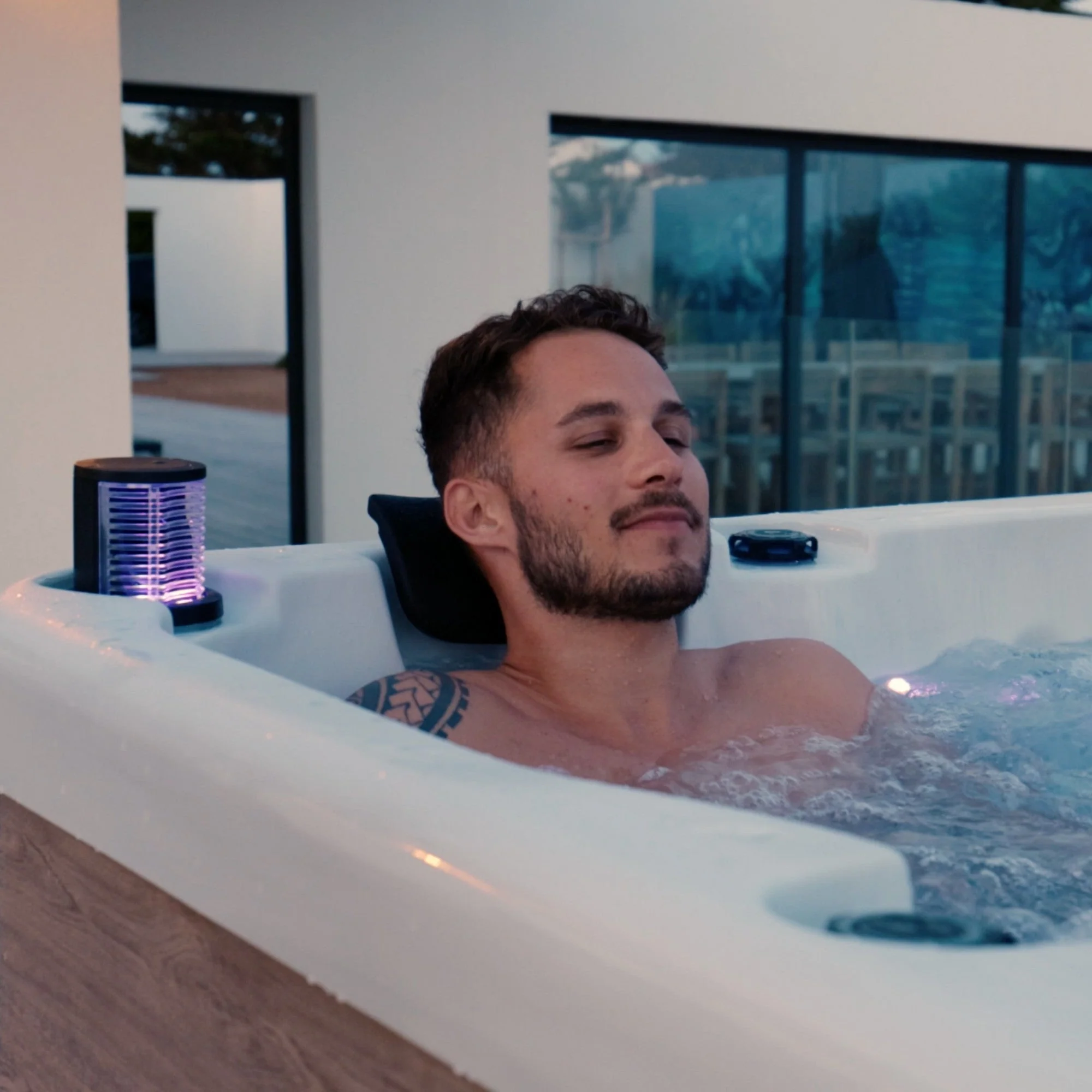
Muscle recovery and nervous fatigue, a line that is more blurred than it seems
On the muscular level, the effects are quite clear. After physical exertion, immersion in hot water promotes the elimination of certain metabolic wastes, such as lactates. The muscles relax, the feeling of stiffness decreases. In amateur sports as well as among some professionals, the spa is sometimes used as an active recovery tool, in addition to stretching or massages.
But it is often on the nervous system that the effects are most striking. Hot water stimulates the parasympathetic system, the one that regulates resting functions. The heart rate slows down, breathing calms down, the body enters a phase of deep relaxation. It is difficult to measure this impact precisely, but the feedback converges: reduction in stress, improvement in falling asleep, feeling of mental “disconnection”.
However, a sports doctor qualifies this reading. “There is a real effect on relaxation, but we should not confuse occasional relaxation with the treatment of chronic stress. The spa can help, but it does not replace comprehensive care. This is an important clarification, as some users tend to attribute almost universal therapeutic virtues to it.
But it is often on the nervous system that the effects are most striking. Hot water stimulates the parasympathetic system, the one that regulates resting functions. The heart rate slows down, breathing calms down, the body enters a phase of deep relaxation. These mechanisms are documented in several clinical studies on hydrotherapy, notably synthesized by the Cleveland Clinic, which highlights its effects on muscle pain, joint stiffness and overall relaxation.
The decisive role of regularity, between ritual and adaptation of the body
Some professionals speak of “physiological learning”. The nervous system adapts to these moments of relaxation, the muscles respond more quickly to variations in temperature and pressure. There is also a behavioral dimension. The spa becomes a ritual, a transitional space between activity and rest. And in an often fragmented daily life, this regularity plays a significant role.
In this context, manufacturers such as:contentReference[oaicite:0]{index=0} are sometimes cited by professionals not for their products themselves, but as an illustration of a market that is structured around these domestic uses. A development that raises questions about the place of well-being in the home.
Precautions, limits and preconceived ideas
However, everything is not that simple. The use of the spa is not without constraints and risks. Water that is too hot, for example, can cause discomfort, especially in sensitive people or people with cardiovascular problems. The duration of the sessions is also a key factor. Beyond twenty to thirty minutes, the effects can be reversed, with increased fatigue rather than recovery.
Some pathologies also require precautions. Skin infections, severe circulatory problems, or certain chronic diseasesrequire prior medical advice. In fact, these contraindications are often neglected by users, attracted by the image of immediate relaxation.
There are also stubborn misconceptions. No, the spa does not “detoxify” the body in the medical sense of the term. Nor does it replace physical activity or appropriate therapeutic care. It acts as a facilitator, a complementary tool. An interesting signal, but to be interpreted with moderation.
At the back, the rigid spa is part of an intermediate zone, between comfort and care. No gadget, no miracle solution. Its interest depends less on the technology than on the use made of it. And this is undoubtedly where its true potential lies, in this ability to create an accessible space for recovery, provided that we do not expect more than it can offer.